
Blepharoplasty is a surgery done to enhance or improve the eyelid appearance. It is aimed at making the eyes appear bigger by removing the droopy skin around the eyes. But sometimes it might just be as little as repositioning the fat around the eyes.
This procedure removes baggy eyelids and smooths the eyelid contours.
Do you need blepharoplasty?
It is a simple answer. It is for those who want to lift their eyes, those who have baggy eyelids, excessive wrinkles and droopy eyelids.
Among other criteria include:
- Has excess skin on the upper or lower eyelids.
- has puffiness or bags under the eyes.
- Hooding of eyelids causing a lateral vision problem.
- Has overall good health, not causing problems for the current surgery.
- Has realistic expectations about the outcome of the procedure.
Patients who are usually over 45 years old seek blepharoplasty. But it can be beneficial to the younger generation who have a genetic predisposition of droopy and baggy eyelids.
Though there are no absolute contraindications for the surgery, certain conditions of the eye like:
- Dry eye syndrome / Eyelid disorders like ectropion / Corneal ulcer etc
- Overt thyroid diseases like Graves / hypothyroidism / ophthalmoplegia
- Uncontrolled high BP & DM may be a little challenging
Before opting for the procedure, many patients’ only concern is how safe it is to undergo the procedure with these underlying systemic issues. For that, always talk to your surgeon and discuss the safety concerns.
How is this procedure performed?
This procedure is performed by removing the excess amount of skin and fat present underneath the eyelids.
It can be performed either under local or general anaesthesia. A simple blepharoplasty involves the removal of an excessive amount of skin and fat can be performed under local anaesthesia. Whereas a procedure that has extensive removal of fat and repositioning of orbital muscles requires general anaesthesia. This procedure can also be performed with other procedures like browlift, facelift, rhinoplasty, etc.
There are 2 types of blepharoplasty.:
1. Upper blepharoplasty
2. Lower blepharoplasty
- Upper blepharoplasty:
This is a surgery performed on the upper eyelid to remove excess amount of skin, fat and correct drooping of the lids. this helps in providing good contour to the upper eyelid as well as removing the hooding of the eyelid.
An excessive amount of skin and fat is removed and tightened. This will improve the lateral vision of patients having excessive hooding of eyes.
This procedure creates a smooth eyelid crease line. It also removes excessive wrinkles on the corners of the eyes called crow’s feet.
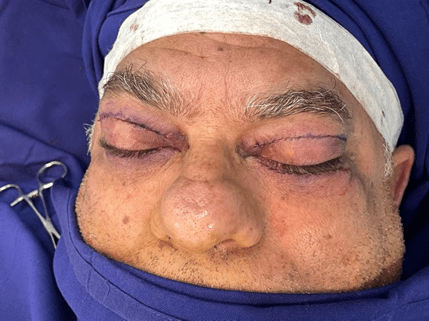
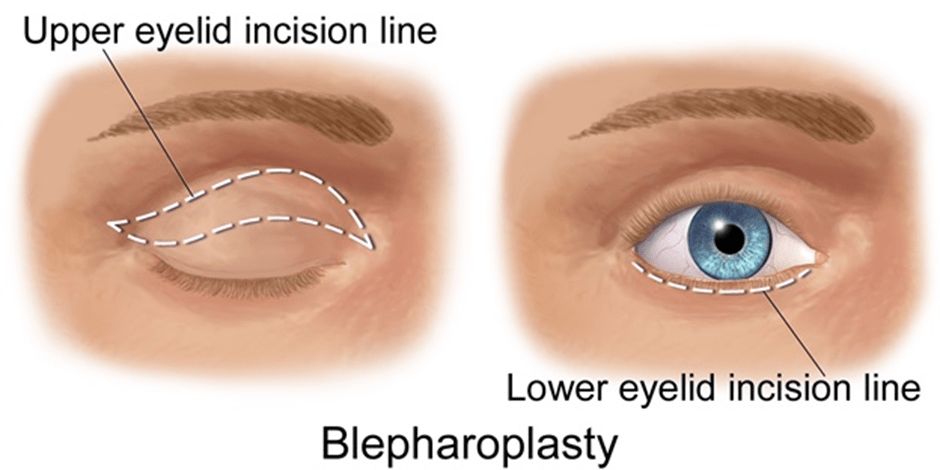
Surgery on the upper eyelids generally involves:
- making a cut (incision) along the eyelid crease in the natural skin fold of the eyelid
- removing excess skin, fat or muscle
Closing the incision – the scar will usually be hidden in the natural fold of the eyelid.

2. Lower blepharoplasty:
It involves removing or repositioning of excessive amount of skin, fat and muscle in the lower eyelid, which reduces the puffy appearance below the eyelids and also reduces the dark circles. This type of surgery mainly aims to improve the overall appearance of the lower eye area.
Just as said in upper eyelid surgery, lower eyelid surgery also utilises the natural crease lines.
Surgery on the lower eyelids generally involves:
- making an incision either just below the lower lashes or on the inside of the lower eyelid
- repositioning or removing fat from the bags under the eyes, and sometimes also a small amount of skin
- supporting the muscles and tendon of the eyelid if necessary
- closing the incision
The surgeon will usually apply thin, sticky strips called suture strips to support the eyelids after surgery. These are usually removed up to 1 week later.
Eyelid surgery may take around 45 minutes to 2 and a half hours. Most people can go home the same day.
Pre operative evaluation
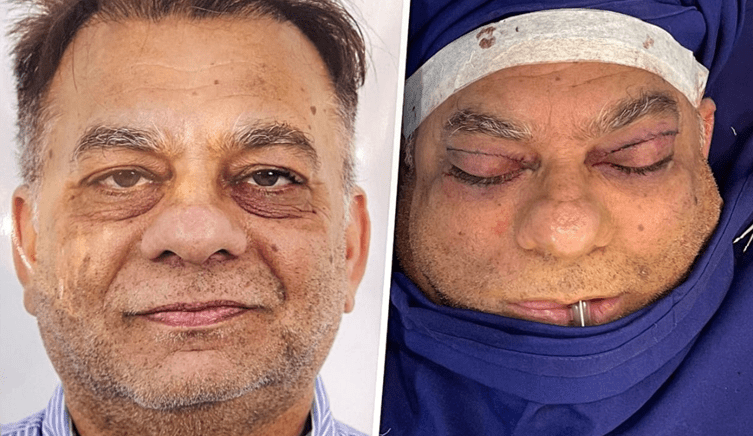
Preoperative patient evaluation for blepharoplasty should document medical and ophthalmologic history such as chronic systemic diseases and medications. Ophthalmologic history should be obtained, including vision, corrective lenses, trauma, glaucoma, allergic reactions, excess tearing, and dry eyes. No cosmetic surgery of the periorbital region should be performed for a minimum of six months following corneal refractory surgery.
How should one prepare for a Blepharoplasty?
- Get a consult from the Oculoplastic surgeon.
- If you are on antiplatelet medication like aspirin, clopidogrel, warfarin etc inform your surgeon priorly.
- Cut down on smoking & nicotine use.
- Proper preparation not only improves recovery but also helps you understand how safe eyelid surgery is in your individual case.
- Arrange for someone to accompany you to the surgery.
What are the risks of Blepharoplasty?
It is common to have these signs after your blepharoplasty surgery, :
- puffy, numb eyelids that are difficult to close
- irritated, sensitive or watery eyes – this may last a few weeks
- bruising
- scars – these should eventually fade to almost be invisible
These are all temporary, and with time and a few weeks of rest and care, they resolve.
Blepharoplasty recovery
Recovery of blepharoplasty is very short compared to other cosmetic procedures. This procedure is mainly a day-care procedure that doesn’t even require a hospital stay. There might be sutures along the incision line, which will be removed after a week’s time. In cases where absorbable sutures are used, these sutures need not be removed. In post postoperative period, you may experience :
- Swelling
- Bruising
- Mild blurred vision due to the topical medicine
- Pain
These, however, will resolve with post-op care and medications. The bruising might be present for 1–2 weeks. The suture marks gradually fade away and might take a month.
For an easy recovery, your surgeon may advise you to follow these instructions:
- Prop your head up with pillows for a couple of days, when resting, to reduce swelling
- Gently clean your eyelids using the prescribed ointment or eyedrops
- Apply a cold pack to your eyelid to help reduce swelling – try a packet of frozen peas wrapped in a tea towel
- Wear sunglasses to protect your eyes from the sun and wind
- Take paracetamol or any painkillers you were given after the surgery to relieve pain
Mild bruising and redness around the eyes and inside the eyes will take 2-3 weeks to disappear.
Patients are advised to avoid strenuous activities, exercises, heavy lifting and bending over for at least one week to reduce the risk of bleeding and swelling. eyes should be protected from the sun and wind by wearing sunglasses. The lubricating eye drops provided are recommended by the surgeon and it aids in easy and faster recovery.
How long do these results stay?
While blepharoplasty improves the natural texture, smoothness and crease line around the eye, it will not stop the natural ageing process.
This surgery results last for several years, but is not a permanent result. The person undergoing this procedure looks ten to fifteen years younger. But as the ageing process, new wrinkles may form while the existing wrinkles and puffiness will all be removed.
The best ways to preserve and regenerate the skin are by :
- Usage of sunscreens
- Usage of sunglasses
- Professional skin treatment to reduce ageing
Scarring on the eyelids after blepharoplasty?
Out of so many cosmetic procedures available on face, the incisions planned for blepharoplasty are the best ones. It is because the incision is always given on the crease lines already existing and scars are always inconspicuous.
Depending on the type of surgery that is planned for you, the incision is planned. This allows and ensures that postoperatively, there are no visible incision lines. There is generally little or no evidence of incisions after complete healing. It is also important to take care of the wound healing after the surgery very diligently. This encourages the scar to lighten and become even more discreet over time.
At Richardson Face Hospitals, we have professionals to take care of your eyelids like no one else.
Will there be any vision improvement after the procedure?
Blepharoplasty is mainly a cosmetic surgery, so it has no direct functional benefits with regard to the improvement of vision.
But it certainly has effects on improving the lateral vision as it reduces the hooding of eye thereby removing the vision obstruction..
In this way, the removal of an excessive amount of fat and skin from the upper eyelid will reduce the hooding. It therefore improves the lateral vision.
There will be transient blurring of vision after blepharoplasty for a few patients. But this effect is temporary and will resolve on its own. This will be mainly due to swelling and inflammation during the recovery period.