Introduction:

Beard transplant surgery involves extracting hair follicles from a donor site and then transplanting them to the beard area. This is a special form of hair transplant surgery

A permanent, natural-looking beard is usually achieved with such surgeries that can be trimmed and styled like natural facial hair.

The techniques used for the beard transplant are:

In the Follicular Unit Transplantation (FUT) technique, a thin strip of scalp is removed and stripped into multiple individual follicular units.

In the Follicular unit extraction (FUE) technique, individual follicles are extracted using punches that are sized around 0.8mm-1mm, and are implanted directly into the beard area.

Clinics today primarily use the FUE method, as it leaves minimal to no scarring and ensures faster recovery.

It also allows for artistic customization of the beard shape and density.

Who benefits from it?

Beard transplantation isn’t limited to cosmetic enhancement. It also serves a reconstructive purpose for patients recovering from illness, injury, or surgery.

Indications include:

  1. Men with scanty beard growth-

Genetic factors and hormonal imbalances can cause uneven beard growth.

A beard transplant helps fill in these gaps.

Burns and facial scars can destroy beard follicles.

 After head and neck cancer surgery or radiation therapy, patients often lose their facial hair.

They even develop scarred areas on the face.

In such cases, beard transplantation helps mask these regions

Thus, it aids in emotional recovery by restoring self-confidence to the patient.

 It is indicated for men who desire a fuller goatee and sideburns or even a denser beard that enhances their looks.

Preoperative evaluation and planning

 -Donor hair quality, density, texture, curl

 -Beard design and symmetry

 -Skin condition and vascularity

 -Patient expectation and esthetic goals

Inside the operating theatre with the entire team

Step One: Anaesthesia and preparation

The team members involved are:

 Surgeon– Leads and performs the key steps.

 Nurses and assistants– Prepare the patient and assist throughout the procedure.

 Technicians– Handle follicles under magnification.

 Anesthetist- Monitors comfort and vitals if sedation is used.

 Step Two: Donor hair extraction

 Step Three: Designing the beard

 Step Four: Creating the recipient’s site

 Step Five: Graft implantation

 Step Six: Final dressing and recovery

 How long does a beard transplant procedure take?

 It’s typically performed as a day care procedure under local anaesthesia

Recovery and aftercare

Proper aftercare is essential for graft survival and optimal growth

First few days:

Two weeks:

One to Three Months:

Six-Nine Months:

Nine- Twelve Months:

The surgical team behind every successful beard transplant

The coordination of a dedicated, efficient multidisciplinary team is required to get a seamless beard transplant procedure.

Team MemberRole
Hair Restoration SurgeonPrepare grafts, manage equipmen,t and support patient care
Assistants / NursesPrepare grafts, manage equipment and support patient care
TechniciansHandle follicles under microscopes to maintain graft integrity
Anesthetist / Sedation ExpertEnsures comfort and safety throughout the procedure
Support StaffMaintain sterility and theatre efficiency

Every graft placed represents teamwork, precision, and attention to detail.

Quick Summary

ParameterDetails
Procedure Time6–8 hours (day-care surgery)
AnesthesiaLocal (with or without sedation)
TechniqueFUE / FUT
Downtime2–3 days
Visible Results6–12 months
LongevityPermanent
Ideal CandidatesMen with sparse beards, post-trauma scars, post-cancer recovery, or gender affirmation

Complications

When performed by experienced surgeons in accredited facilities, beard transplants are extremely safe.

Possible but rare side effects include:

Beard transplant in post-cancer and post-traumatic cases

For patients with facial scarring due to burns, trauma, or cancer surgery, beard transplantation plays a reconstructive role.

However, these require special considerations:

The results can be life-changing, helping patients camouflage scars, restore symmetry, and rebuild confidence after illness or injury.

Results and Longevity

Transplanted beard hair behaves like natural hair, and it can be shaved, trimmed, or styled just like how it grows as natural hair.

Since they originate from the permanent donor zone, they continue to grow for life.

No special maintenance is required beyond regular grooming.

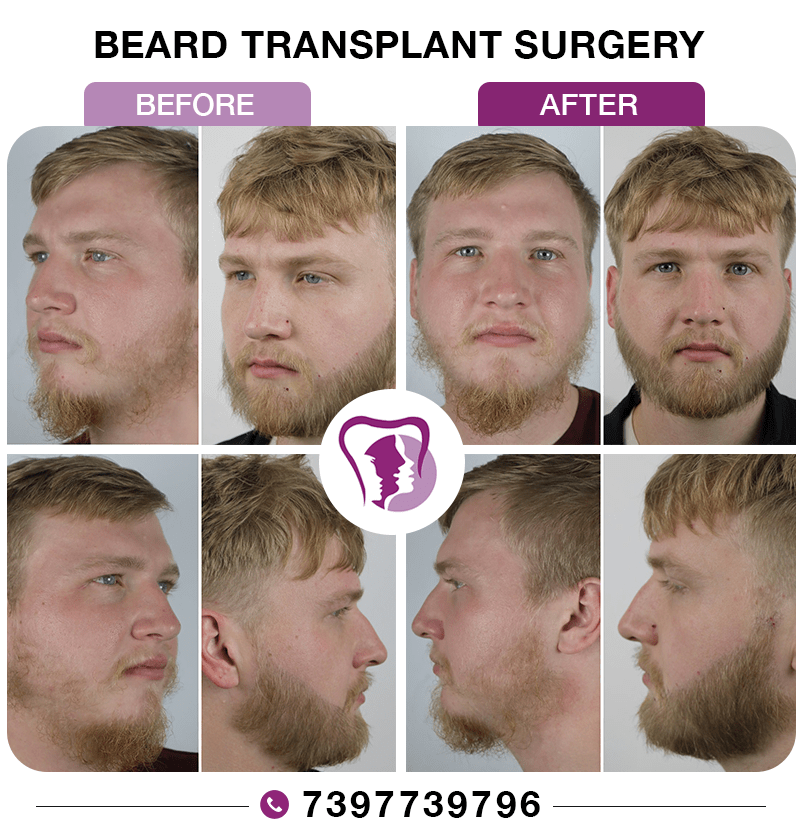
Here, in the pictures shown below, we have a patient who flew all the way from Canada to our hospital with a chief complaint of sparse hair over his beard region that he attributes to a traumatic injury in childhood.

A pre-operative evaluation of the hair density and texture was done along with the routine blood investigations and systemic evaluation for the procedure. After obtaining fitness for the procedure, he was taken up for a beard transplantation.

Beard Transplant Surgery

The before and after photographs show his transformation, where scanty hair is now replaced with a full crop of hair, giving him a defined, chiseled, masculine look.

Leave a Reply

Your email address will not be published. Required fields are marked *