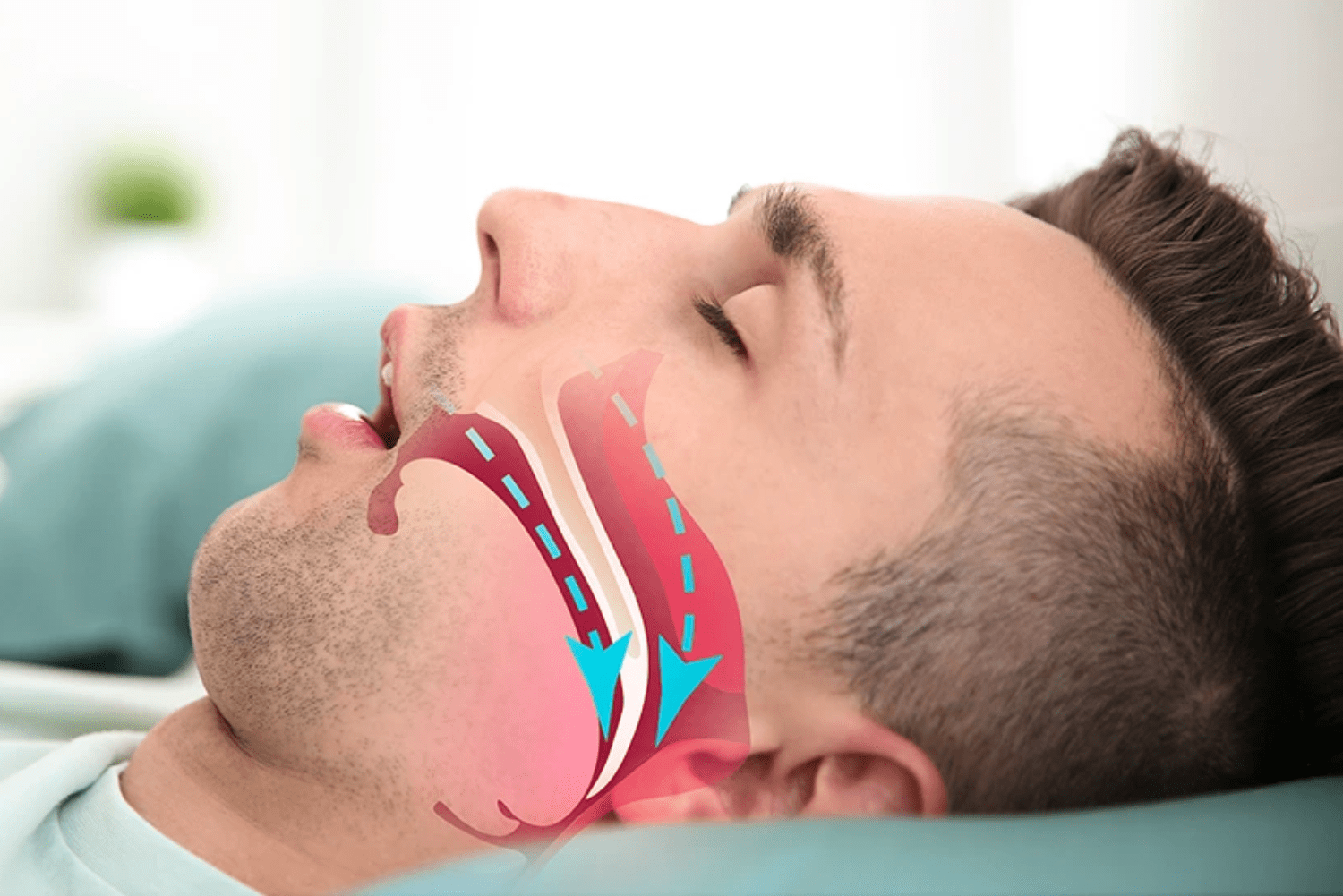
Functional nasal reconstruction, also known as functional rhinoplasty, is a surgical procedure used to correct breathing problems. It is done by reshaping and repositioning the structures inside and outside the nose. Several people have an obstructed or stuffy nose most of the time.
The conventional treatments, like steam inhalation or medication, would not solve the issue. The underlying issue has to be diagnosed priorly there is prolonged period of nasal obstructions. Most often, we have come across people suffering from breathing difficulty that would have led to sleep disturbances, an increased number of headaches, unable to work, disturbed concentration, daytime snoring, etc.
All of these issues are commonly related to problems with breathing patterns.
Cosmetic rhinoplasty is performed for the aesthetic improvement of the nose. This involves changing the size, width, shape, breadth, tip projection and angulation of the nose and also the creation of the dorsal aesthetic line. Rhinoplasty is a surgery of millimetres. At Richardsons, we provide the best rhinoplasty treatment in India. With over 10,000 cases of experience, both in India and abroad, Dr Sunil Richardson is equipped to deliver the noses of your dreams.
The main reasons for having difficulty in breathing will be due to a deviated nasal septum, enlarged nasal turbinate or nasal valve collapse that can cause obstruction.
The functional nasal reconstruction surgery can be performed along with cosmetic rhinoplasty to improve the appearance simultaneously.
The common surgical techniques used in the nose surgery are septal reconstruction and septoplasty to straighten the septum, and spreader grafts or alar batten grafts to widen the nasal passages or valves.
What is the Functional Nasal Reconstruction procedure?
Functional surgery of the nose is a surgical procedure to improve nasal breathing. It can also be combined with cosmetic rhinoplasty to improve the aesthetic profile of the nose. It mainly addresses the functional breathing difficulties that can be due to trauma, congenital or birth defects or due to previous surgery.
What does it treat?
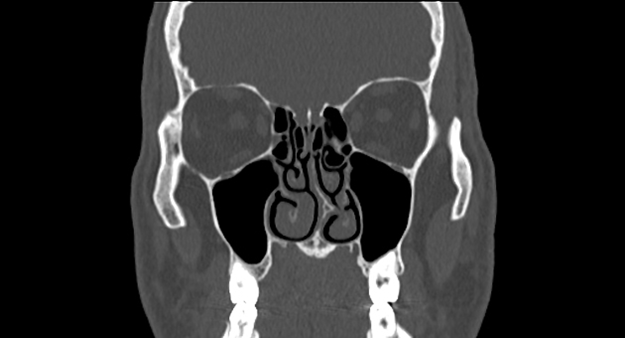
Deviated nasal septum: our nose is divided by a cartilage and bone that is called the septum. When this wall between the nostrils isn’t straight, breathing will be difficult.
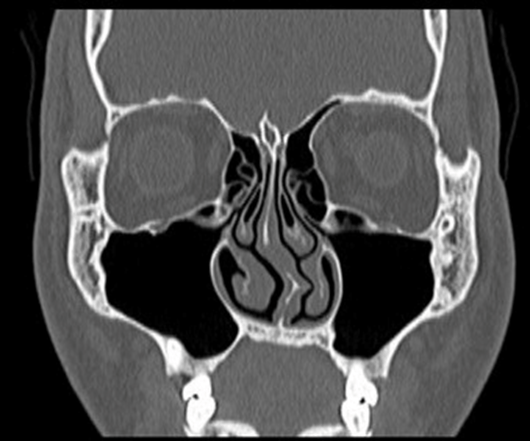
Nasal valve collapse: the nose has 2 valves. external valve and internal valves. It is the opening of the nostril that you see. When these valves are collapsed, the nose appears pinched up in the tip region, particularly during inhalation.
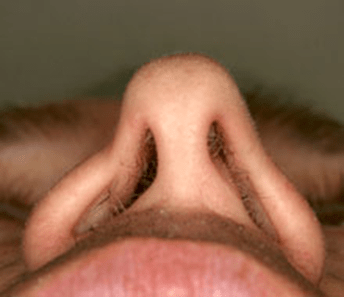
Nasal valve collapse
Large turbinates: these are curled bony structures in the sides of the nose. These are present inside the nose. They warm, humidify, and filter the inhaled air. They are present in 3 pairs, called the superior, middle and inferior turbinates. The inferior turbinates are the largest of all and most likely swell due to allergies or infections. This condition is known as turbinate hypertrophy. This creates nasal obstructions and difficulty in breathing.
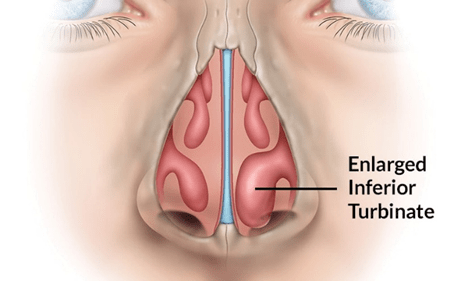
Other issues: other problems like chronic sinus infections, nasal injuries, fractures and certain congenital defects or septal wall perforation are the reasons for nasal obstructions and difficulty in breathing.
How are they corrected surgically?
- Septoplasty: It is a surgical procedure done to straighten the nasal septum. The nasal septum is made of cartilage and bone that divides our nostrils into right and left. So correction of this deviation improves the air flow. As there is improved airflow, it can alleviate symptoms like difficulty breathing, nasal congestion and snoring.
A small incision is made inside the nose, and the cartilage is repositioned, and the bony deviations are removed. This will heal normally with some swelling and bleeding takes about one to 2 weeks of recovery.
2. Spreader grafts: This is a type of graft that will be placed alongside of the nasal septum to increase the size of the internal nasal valve area. The craft will be taken from the patient’s own body. It is a small piece of cartilage that will be harvested from the rib cartilage, the ear cartilage, or the patient’s own remaining nasal septum. This helps in keeping the nasal septum straight as well, by providing extra support.
Rib graft is an autologous graft that is harvested from the patient’s own body. It involves harvesting the rib cartilage from the rib cage, and it is used to augment or reconstruct the framework of the nose.
3. Alar batten grafts: These are the small cartilage species that are placed inside the ala. This increases the rigidity and support of the side walls of the nose. When the support has increased, it prevents the collapse of the nose during inhalation.
Any nasal asymmetry that is due to the difference in the alar thickness will be corrected using this method.
Reconstructive rhinoplasty: This type of nose job is performed when major reconstructions are needed on the nose, often following road traffic accidents, major cancer or tumour surgeries, or even after multiple failed previous nose surgeries. These procedures can involve reconstructing the bony architecture of the nose as well as addressing overlapping soft tissue.
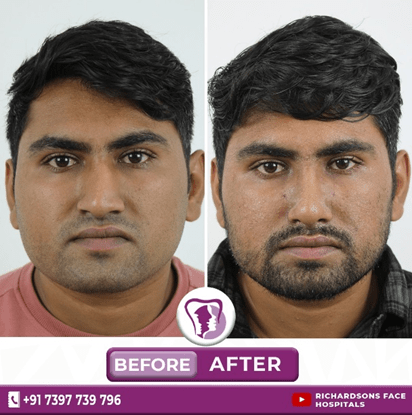
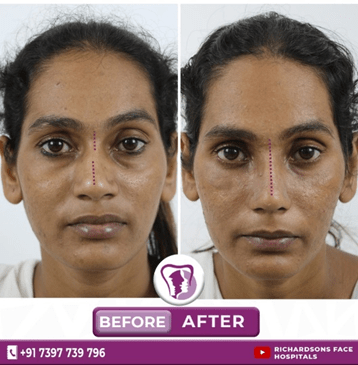
The deviation of the nasal tip pointing towards right before surgery(right). This was corrected with surgery (left).
Benefits of this surgery
The benefits of this surgery are :
1. You can notice improved airflow and breathing, especially during sleep or exercise.
2. Symptoms like mouth breathing, dry mouth and exercise intolerance will be resolved.
3. Potential issues like chronic sinusitis and headaches that would cause disturbance in daily lifestyle would be corrected.
4. It is a functional surgery, but cosmetic rhinoplasty can also be performed along with this at the same time. This offers aesthetic goals, so patients can achieve both better breathing and improved appearance.
5. Rhinoplasty or nose correction surgery’s results usually last for a lifetime with little to no change at all. But certain factors, such as the natural ageing process or an accident, may result in slight alterations to your nose.
6. Dr Sunil Richardson has helped many patients resolve the issue of their snoring through Functional Rhinoplasty Surgery, and has brought a smile to each and every patient.
What is the course of events that you undergo at Richardson’s Face Hospital?
On your visit to the hospital, you will be consulted in our outpatient department. 3d CBCT scans are taken to analyse the underlying issue. After diagnosis and discussion with you about the planned surgical procedures, you will be prepped for the surgery.
A few blood tests are required for the surgery and anaesthesia evaluation. You are then ready for the surgery.
Patients are generally asked to stay on an empty stomach 6 hours before surgery to avoid any vomiting while being under general anaesthesia, as it can very fatal.
After entering the ot, you will be given injections that put you under sleep. Our surgeons make the magic in the given time. This procedure will happen for 2-3 hours. Later which you will be shifted to the ICU for observation.
You will be drowsy during this recovery period of 6 hours. Later on, you can start having your regular meals. Better to start it with a lighter note of juices.
A nasal splint and nose will be packed with a medicated gauze. This will stay for 5 days, after which the nasal pack is removed. On the 12th day, the nasal splint is removed. This timing varies depending on the procedures done.
How many days to stay at the hospital?
Normally, patients need not stay in the hospital at all unless the surgery was complex and the operating surgeon requires them to stay in the hospital.
Usually, it will range from 3 to 7 days. If severe reconstruction is done, then a 7-day stay is advised for recovery and observation with IV antibiotics. If not patient will be discharged within 2-3 days.
Is functional reconstruction of the nose painful?
This type of procedure is done under general anaesthesia. You will be put to sleep, and there will be no pain sensation. Post-surgically, analgesics or pain medication will be given. So it’s a pain-free procedure.
Is Blood loss expected?
Even though it is a major surgery, a minimal amount of blood loss is expected. That is around 50-100ml. so it doesn’t require any blood transfusion later on, and it’s not life-threatening either.
Functional mainly addresses the problems associated with breathing. At Richardson’s Face Hospital, many patients who have their nose bent or deviated or sometimes even straight-looking, can have their nose blocked. This is a functional problem that is very important to correct. In functional terms, we ensure that the patient’s functional aspects are addressed.
How long does it take for the recovery?
The recovery period is short. You can get back to your work from day 3 if it is a remote job or work from home. If your job requires your presence on-site, then you will have to wait for 10-14 days for complete healing and recovery.
Total recovery usually happens 4-6 weeks later, as the sutures inside the nose will require that amount of time to absorb. This would allow for clear passage of air in the nostrils.
Any obstruction, including sutures present inside the nose postoperatively, will not allow a good airway. This only requires a generous amount of patience to heal.