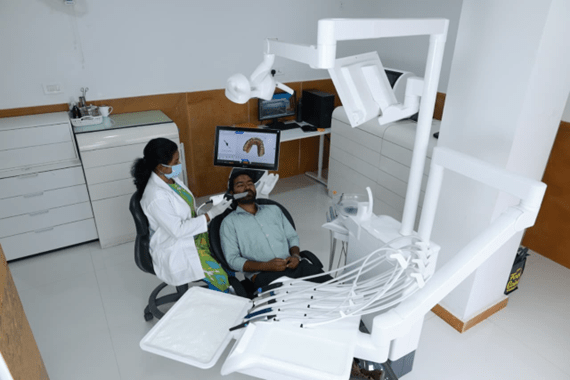
The basics of good oral hygiene are always maintaining a proper brushing habit and visiting your dentist regularly. But brushing alone does not aid in good oral hygiene. A proper general dental visit should be done once every six months. So that any kind of dental issues can be identified and treated in the early stage itself.
TIPS FOR DAILY CARE FOR THE TEETH:
- Visit your dentist regularly, once in six months of time
- Avoid acidic drinks
- Limit sugar intake
- Floss your teeth daily
- For a fresh mouth, you can use mouthwash
- Rinse your mouth with plain water after every meal
- Brushing twice a day can prevent cavities and prevent the deposition of plaque
- Using regular mouthwash can prevent gum disease
ADVANTAGES OF TEETH CLEANING:
- Regular cleaning can remove all the food debris, calculus, and plaque
- Cavities can be identified in the early stages themselves
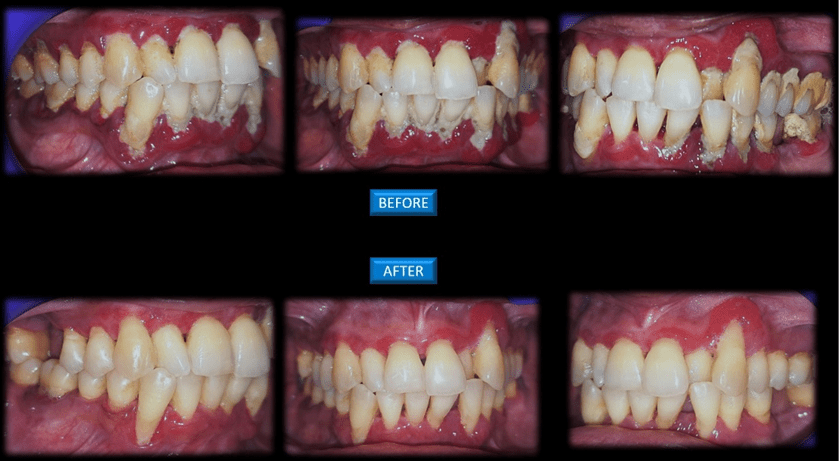
- Prevents gingivitis and periodontitis
- Polishing can prevent further deposition
- Early stages of gingivitis and periodontitis can be detected.
MYTHS AND TRUTH ABOUT TEETH CLEANING:
MYTH: Scaling will remove your other layer of enamel
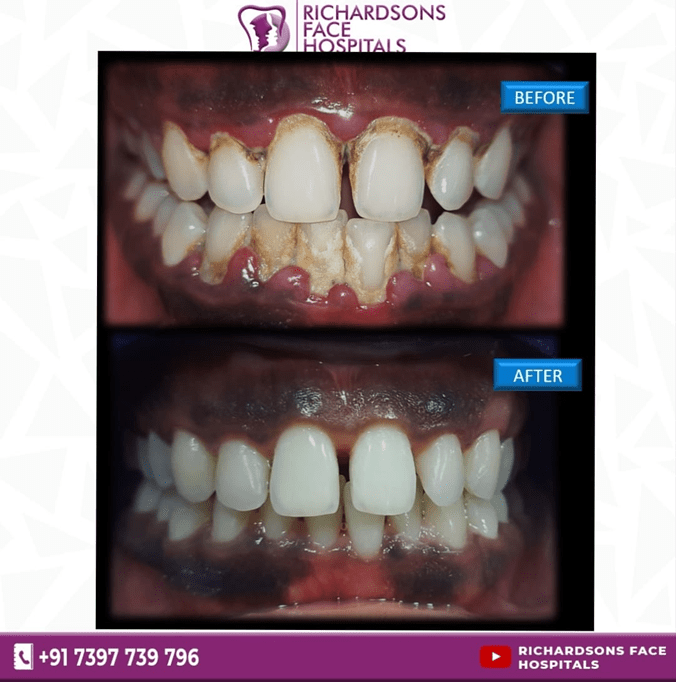
TRUTH: Scaling only removes the extra deposit, plaque, and calculus in your teeth. It will not any harm to the teeth
MYTH: Scaling is painful
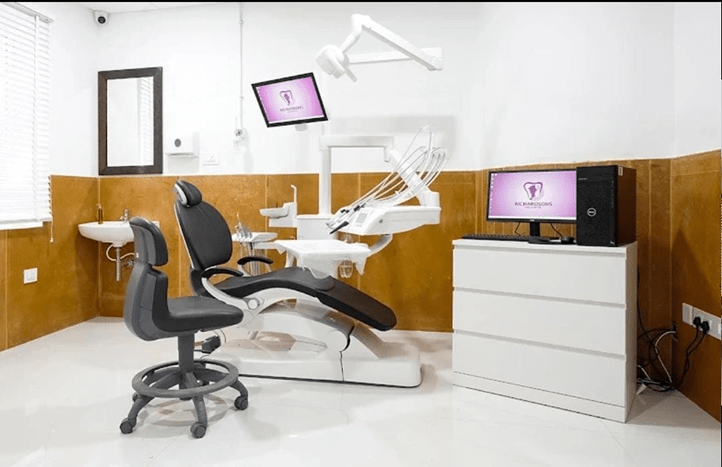
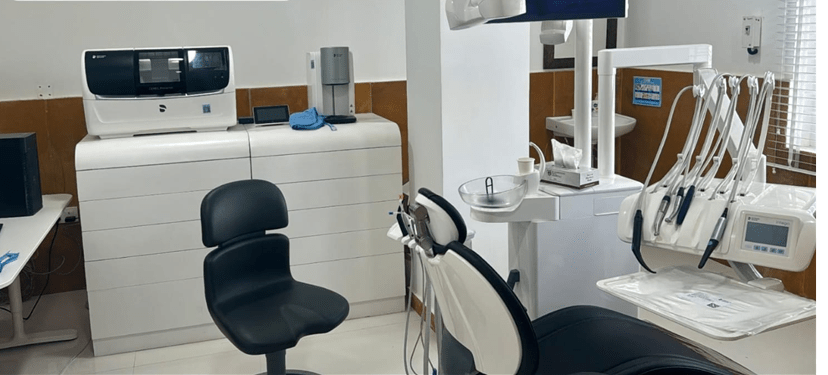
TRUTH: Scaling will not be painful at all. We have modern equipment in our Richardsons Face Hospital. Through which the dental scaling can be done pain-free and the patient will be more comfortable. If they still feel pain or sensitivity, can be treated by applying local anesthetic agent or a desensitizing paste, which can be helpful to the patient.
MYTH: Scaling can loosen your teeth
TRUTH: Scaling will not lose or weak your teeth and gums. If the are more deposits and they didn’t maintain their oral hygiene well can leads to mobility of the teeth. For that kind of individuals, once the scaling done, minimal tooth mobility will be there, which can be treated by giving the mouthwash, gum paint and proper follow-ups
MYTH: Professional teeth cleaning can give you gaps in between your teeth.
TRUTH: It will not create any spaces in between the teeth. If you think so, it’s usually because of the deposits or calculus which was already built in between your teeth, which got removed by the dental scaling.
MYTH: Dental scaling causes permanent sensitivity to the teeth.
TRUTH: Sensitivity after dental scaling is temporary. After scaling, teeth and gums take little time for the adaptation. It will get normal within three days of time.
MYTH: Dental cleaning will whiten your teeth.
TRUTH: Dental cleaning will not whiten your teeth. It will remove your deposits and calculus. The polishing of your teeth can remove the stains which are extrinsic. But still, it will not whiten your teeth.
WHAT WILL DENTIST DO IN SCALING:
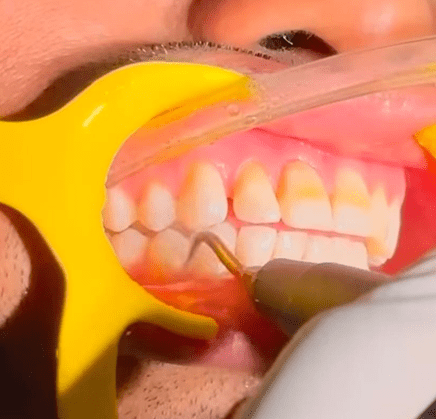
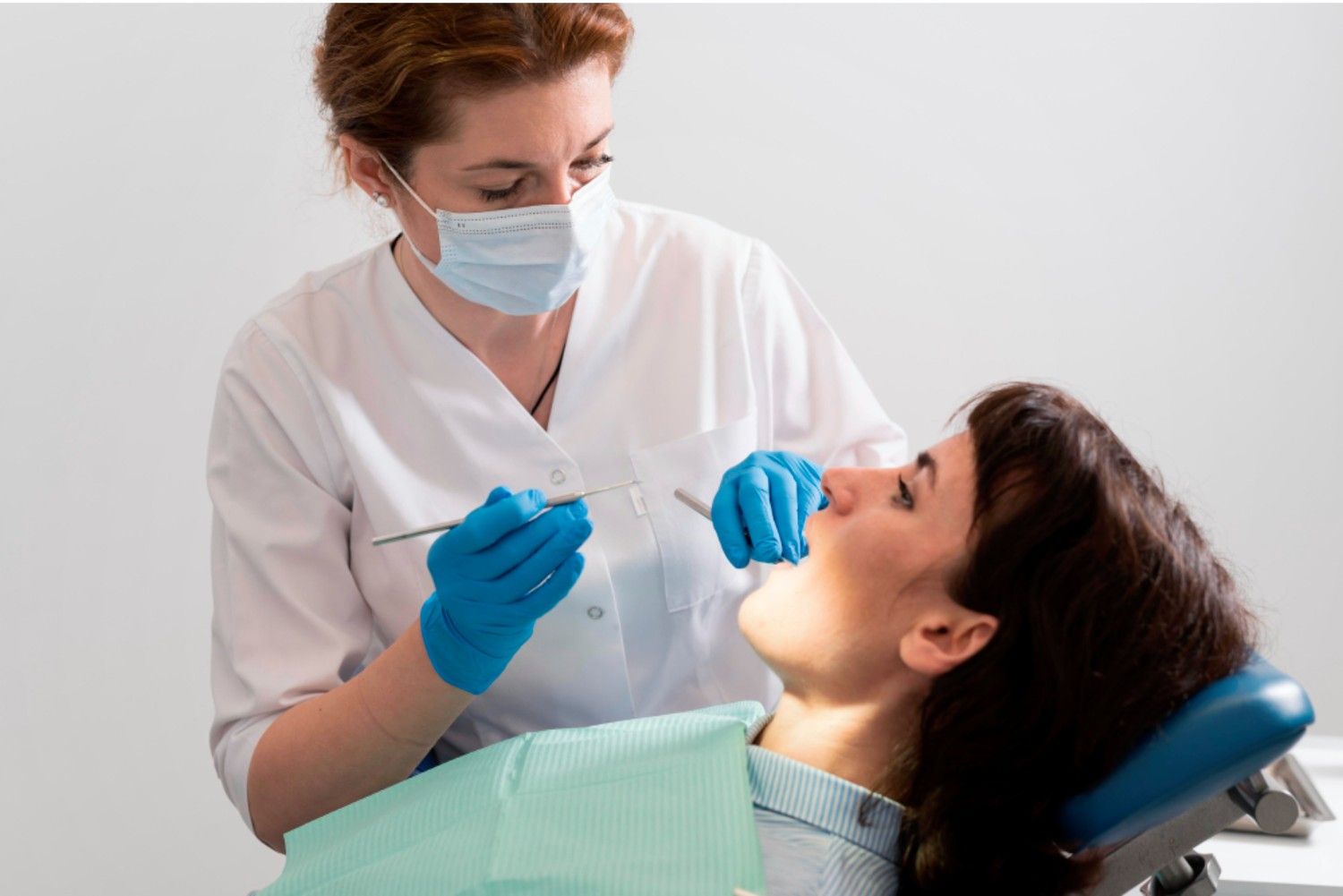
- Dental scaling is a professional cleaning of your teeth in which the plaque, calculus and the extrinsic stains can be removed from the surface of the teeth and also below the gumline
- Scaling can be done using the ultrasonic scalers which are painless and gentle instrument.
- The calculus can be either supragingival (above the gingival margin) or subgingival (below the gingival margin)
- Supragingival scaling will not be painful as the deposits will be above the gums
- Subgingival scaling will be done under local anaesthesia, as the deposits will be present below the level of gumline.
- Polishing will be done after scaling so that it prevents further deposition of the plaque and the calculus.
- Polishing can be done using the pumice and desensitizing paste
POST INSTUCTIONS AFTER SCALING:
- Avoid smoking for three days after scaling is recommended
- Avoid staining foods for a week
- Brush gently with the desensitizing paste
- Rinse with the warm saline water for a week to promote good healing of the gums
- Do brushing twice a day and flossing once in a day
BRUSHING TECHNIQUE:
- Brushing twice a day is a good habit which can helps to maintain your teeth health
- Brush at least for 2 minutes
- Replacing your tooth brush for at least once in three months is always advisable
- Medium size bristled brushes can be used
- Hold the brush in a 45-degree angulation towards your gums. The brushing should be done from gums towards the teeth, which can remove the food debris, and plaque which are deposited in between the teeth and gums
- Brush in your teeth in circular motion
- Don’t brush your teeth vigorously
- Do brushing in all the surface of the teeth including inner surface
- Tongue also should be cleaned well. Otherwise, the food particles which are depositing in the tongue can gives you bad breath.
FLOSSING TECHNIQUE:
- Flossing can be done to remove the food particles which are stuck in between the teeth.
- Doing flossing once in a day preferably before bed is advisable
- It helps to prevent the cavities in between the teeth
- Skipping the flossing can promote cavity formation in between the teeth.
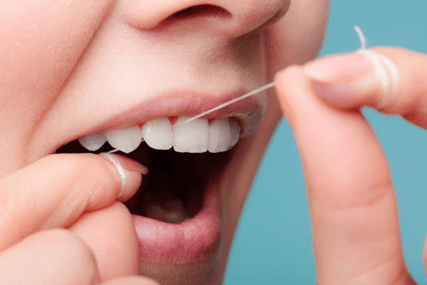
- Flossing is a technique in which a thin layer of thread is used to clean the food particles in between the teeth.
- It prevents further gingivitis and bad breath.
IMPORTANCE OF FLOSSING:
- It reduces the chances of getting cavities in between the teeth
- Its mainly aim in maintaining the general health of the gums and prevents the bad odour.
- Also, removes the food particles and plaque in-between the teeth which prevents the gingivitis and periodontitis
HOW TO DO FLOSSING:
- Usually, it’s a thread which comes in a roll
- Take 15-20 inches of thread flossWrap the thread around the middle fingerHold the edge of the floss tightly in between the thumb and the index fingersSlide in-between the teeth in forward and backward motion.Move the floss in c shape towards the tooth and move the thread up and down, press gently towards the gumline, so that the food debris comeout.Do the same for all the teeth around all edges of the mouth.If the tread floss is difficult, we can use floss with the handle
- Recently, water flosser plays a vital role in maintaining the oral hygiene.
OBSTACLES TO MAINTAIN GOOD ORAL HEALTH:
- Pediatric children and elderly people find it difficult because of inability to brush the teeth properly.
- People who are undergoing traditional orthodontic bracket treatment may find difficult because of the braces Medically compromised people
- People with crooked and crowded teeth alignment
CONCLUSION
The combination of brushing, flossing and the regular dental checkup can helps you in maintaining the good oral hygiene which protects your dental health.